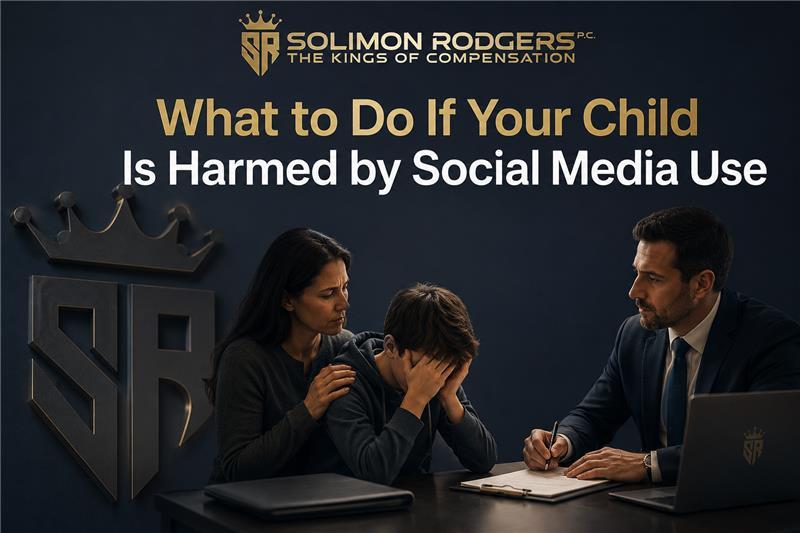
For many parents, the changes do not happen all at once. A child who once used Instagram or TikTok casually may gradually start staying up later, pulling away from family activities, or growing anxious whenever their phone is out of reach. Grades slip, friendships shift, and habits that once looked like an ordinary phase start to look like something more serious.
When social media use appears to be affecting a child’s mental or emotional wellbeing, parents are often unsure what to do next. Should you take the phone away? Talk to a therapist?
Your child’s health and safety always come first. At the same time, families who suspect social media contributed to serious psychological harm should understand that the choices they make in the coming weeks can affect their ability to evaluate a potential legal claim later. Knowing how to respond now can help you support your child while preserving information that may matter down the road.
Recognizing When Social Media Use Has Become a Serious Concern
Spending a significant amount of time on social media does not automatically mean a child has developed an addiction or suffered legally significant harm. Instagram and TikTok are woven into how most teenagers socialize, so heavy use alone rarely tells the full story. The more important question is whether that use has started interfering with your child’s ability to function.
Watch for changes in sleep, academic performance, friendships, eating habits, or emotional stability. A child may repeatedly try to cut back and fail, grow anxious or irritable when access is restricted, or lose interest in things that used to matter to them, sometimes alongside worsening depression, anxiety, an eating disorder, or self-harm.
These changes should not automatically be blamed on social media, since children face mental health challenges for many reasons and sorting out what contributed to a particular condition usually requires professional evaluation. What matters is recognizing when the changes are serious enough to deserve more than a “typical teenage phase” explanation.
Put Your Child’s Health and Safety First
When a child appears to be struggling emotionally, legal considerations should never come before appropriate care. Consider reaching out to a pediatrician, therapist, psychologist, or psychiatrist who can evaluate your child’s symptoms, recommend treatment, and determine whether further intervention is necessary.
Be open with providers about the changes you have observed, including shifts in sleep, mood, eating habits, school performance, and technology use. A complete picture helps them evaluate your child more effectively. These records may also, later on, help establish when symptoms appeared and what treatment became necessary, but that is a secondary benefit. The immediate goal is making sure your child gets the support they need.
Preserve Evidence Without Keeping Your Child on a Platform That Is Hurting Them
A natural reaction is to immediately delete your child’s account, remove the app, or erase troubling content. Limiting access can be the right call for your child’s wellbeing, but permanently deleting an account or wiping a device before understanding what it contains can create problems if your family later looks into legal action.
Social media addiction litigation often depends heavily on evidence showing how a platform was actually used over time. Screen time reports, account histories, notifications, messages, and other usage data can help attorneys and experts understand the relationship between platform use and the harm your child experienced.
Protecting your child from continued harmful use and preserving that information are not conflicting goals; you can restrict or remove access to an app without destroying the underlying account data. If you are unsure how to handle a device or account, getting legal guidance before you delete anything can help you avoid losing information that may later become important.
Keep an Accurate Record of How Things Changed
Digital records only tell part of the story. Showing how your child’s life changed, and whether those changes tracked with prolonged platform use, often depends just as much on medical and school records as it does on app data.
Medical and mental health records document symptoms, diagnoses, and treatment as they happened, rather than as you remember them months later. School records add useful context if grades dropped or teachers noticed behavioral differences. Your own notes on changes in sleep, family interactions, friendships, and emotional behavior can also help build a timeline more reliable than reconstructing events from memory later.
The goal is not to build a case against a social media company before you know whether one exists. It is to preserve an accurate picture of what happened, so that if an attorney later evaluates your circumstances, there is something reliable to look at.
Mistakes That Can Make a Claim Harder to Evaluate
Families dealing with a child’s mental health crisis want answers quickly, and that urgency can lead to decisions that make a potential claim harder to sort out later.
One common mistake is treating screen time alone as proof of addiction. A child spending several hours a day on TikTok may be a genuine concern, but usage numbers by themselves rarely explain whether a platform caused or contributed to a psychological injury. Medical history, treatment, behavioral changes, and platform use all have to be considered together.
Avoid trying to diagnose your child yourself or treating every mood swing as evidence of addiction; qualified professionals are far better positioned to determine what your child is experiencing. Be careful about discussing a potential lawsuit on social media, too, since posts and comments can become relevant if litigation moves forward.
When These Changes May Point to a Legal Claim
Not every child who experiences anxiety, depression, or heavy screen time has grounds for a lawsuit. Current social media addiction litigation generally focuses on allegations that specific platform design features, such as personalized recommendation systems, continuous content feeds, and frequent notifications, encouraged compulsive use and contributed to measurable harm, particularly among younger users. Families often wonder whether they can actually sue Instagram or TikTok for addiction, and the honest answer is that it depends far more on the evidence connecting your child’s diagnosis to the platform’s design than on how many hours they spent online.
The existence of broader litigation against companies like Meta and TikTok does not automatically mean your family has a viable claim. Who qualifies for a social media addiction lawsuit depends on your child’s age, how the platform was used, their medical history, and the severity of the harm. Two children can present with similar symptoms and still have very different legal circumstances, which is why relying on general information online to self-diagnose a case rarely works.
How Solimon Rodgers Can Help Your Family
Social media addiction litigation is still a developing area of law, involving product liability principles, medical evidence, digital records, and expert analysis of how specific platform features affected an individual child. For parents already focused on helping a struggling kid, figuring out how it all fits together can be difficult.
At Solimon Rodgers, we start by understanding what happened to your child and your family: the history of social media use, documented injuries, treatment, and available evidence, before we talk about whether pursuing a claim makes sense. For families in Pomona, Los Angeles County, and throughout Southern California, an evaluation can bring clarity even when the answer is not obvious yet.
Frequently Asked Questions
Should I delete my child’s Instagram or TikTok account if I think it is causing harm?
Protecting your child’s wellbeing should come first, but permanently deleting an account may erase information relevant to a potential legal claim. You can often restrict access without destroying the underlying account data. If litigation is being considered, speak with an attorney about preserving information before permanently deleting accounts or records.
What evidence should parents save for a potential social media addiction lawsuit?
Useful information can include medical and mental health records, available screen time and account usage data, school records, and documentation of significant behavioral changes. Focus on preserving accurate records rather than trying to decide on your own what proves a legal claim.
Does my child need a formal diagnosis to pursue a claim?
A formal diagnosis can be important evidence, but whether it is required depends on the nature of the claim and the alleged injuries. Medical evaluations help establish what condition your child experienced, when symptoms developed, and what treatment was necessary.
Can parents file a social media addiction lawsuit for a minor child?
Parents or legal guardians may be able to pursue legal claims on behalf of a minor, depending on the circumstances. Whether a particular child has a viable claim requires an evaluation of the alleged harm, platform use, and available evidence.
When should I speak with an attorney about social media harm to my child?
Consider getting legal guidance once your child has experienced significant, documented harm you believe may be connected to compulsive platform use. Speaking with an attorney earlier can also help you understand what evidence should be preserved.
Protecting Your Child and Understanding Your Legal Options
When social media use appears to be contributing to serious changes in a child’s mental health, you do not need to know right away whether you have a legal case. The first priority is helping your child get appropriate care. From there, preserving relevant information and keeping an accurate record of how the situation developed puts your family in a better position to make informed decisions.
At Solimon Rodgers, we understand parents considering a social media addiction claim are usually dealing with a lot more than a legal question. We review each family’s circumstances carefully and explain the available options honestly, without assuming the outcome.
If you believe Instagram, TikTok, or another social media platform contributed to serious harm suffered by your child, contact Solimon Rodgers for a free case review.
Call us at (844) 774-3577 or visit www.KingsofWC.com to learn more.